 Xcellerate · IT & security partner, Flanders · 2021 → today
One Windows agent grew into a platform for Windows, macOS and Linux.
Xcellerate runs IT and security for organisations across Flanders. Since 2021 we've built the platform their engineers do it with: one place to track, patch and fix every machine at every customer.
- Endpoint · in production
- Xcellerate.app · in development
- first release, still evolving
- 2021
- operating systems, one agent
- 3
- lines of Rust, ~600 tests
- 68k
- isolated database per customer
- 1
Our reliable development partner since 2022.
Deritron has been our reliable development partner since 2022, helping us grow Xcellerate RMM into a mature product with global reach. Their consistency and commitment have made them a highly valued part of our journey.
We value their partnership.
Deritron has helped accelerate RMM Labs’ journey into AI through the development of our SaaS platforms and products. We value their partnership as we continue building and bringing our ideas to life.
The problem
An IT partner looks after machines at many different customers, spread over sites that each have their own network. A separate tool per job holds up for a while, until you want to know which laptops still run a vulnerable Chrome build and the answer is scattered over three dashboards.
Xcellerate wanted one platform they owned, with the security you'd expect from a company that manages other people's networks.
Xcellerate Endpoint
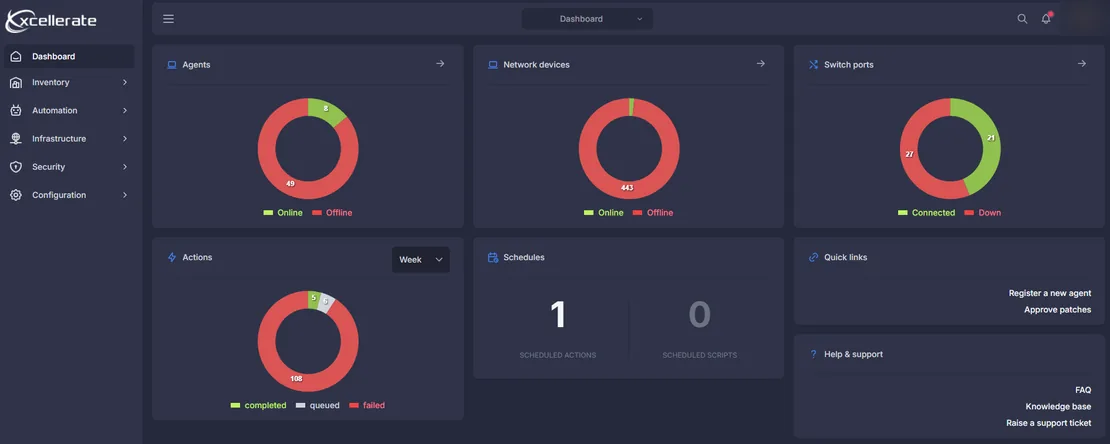
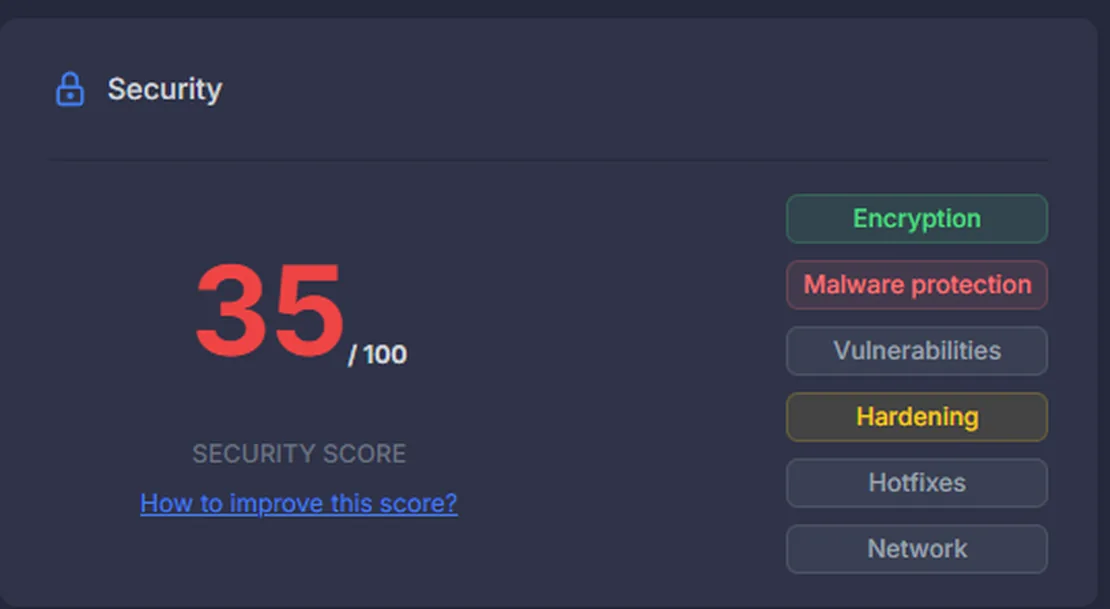
We built a multi-tenant SaaS where every Xcellerate customer gets its own isolated database. Each Windows machine runs an agent that reports its inventory over an encrypted channel (X25519 with XChaCha20-Poly1305, protected against replay): hardware, software, patches, services, users and antivirus.
From the dashboard, engineers send scripts and commands back, roll out applications through a dedicated Chocolatey feed and set a patch strategy per group. Probes read the network meanwhile, from switches and ports over SNMP to VLANs, IP address management, DHCP, DNS and Active Directory.
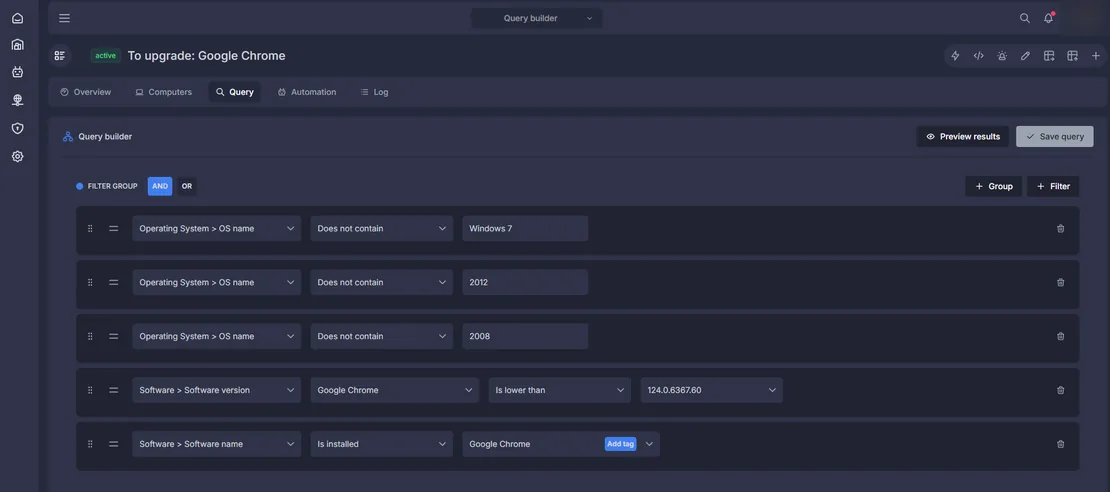
Vulnerabilities (CVEs) are tied to the devices running each software version. With the query builder, engineers ask questions like "which devices run Chrome below version 124, leaving out the old Windows servers?" and attach an automatic action to the answer. Live agent connections go through a custom WebSocket server on OpenSwoole.
The next generation: Xcellerate.app
In 2026 we started a rebuild. Xcellerate.app is self-hostable: an organisation brings up the whole platform from one Docker Compose bundle, and the first boot creates keys and storage on its own.
We wrote the new agent in Rust. It runs as a service on Windows, macOS and Linux, with MSI, EXE, PKG and DEB installers. Keys live in the operating system's keychain, and the agent keeps pending actions on disk, so work survives a reboot or a stretch without a connection.
Extensions arrive as digitally signed plugins; the first one brings RustDesk in for remote access. A new agent version goes to a pilot group before the whole fleet gets it, and an update that fails rolls itself back.
Where it stands
Xcellerate Endpoint runs in production. Xcellerate.app is in active development: the backend is split into 27 modules, and backend and frontend together have more than 380 files of automated tests. The Rust agent adds roughly 600 of its own.
 Soetaert · Transport Builder
 WUK
 Ardosolar
 TruSecure